

RCV vs. ACV: The Difference Between “Covered” and “Actually Paid”
Your home may be worth $500,000 on the market. Your insurance policy, however, isn’t necessarily designed to cover the home’s market value.
That distinction matters.
Homeowners insurance generally considers the cost to rebuild the structure, rather than the home’s purchase price or the value of the land. Florida’s Department of Financial Services advises homeowners not to use the purchase price, mortgage amount, or property-tax value as the basis for determining dwelling coverage. Instead, coverage should reflect what it may cost to rebuild the home based on current construction and labor costs.
And when that number isn’t kept up to date, a coverage gap can become expensive.
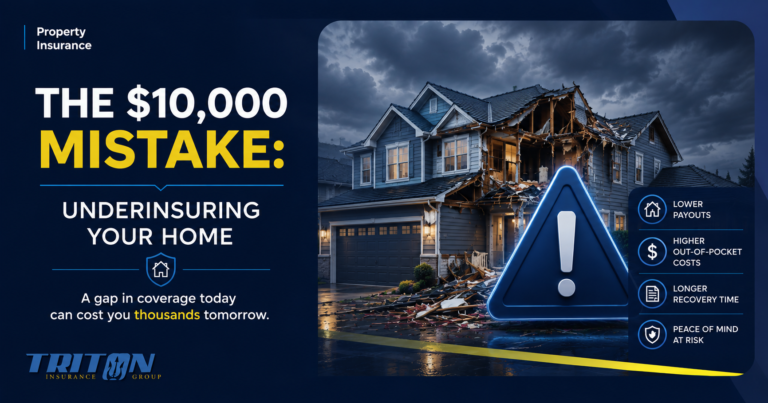
A $10,000 difference in coverage may seem relatively small when you’re looking at a policy declaration page. After a major loss, however, that gap could become a significant out-of-pocket expense.
How Does a Home Become Underinsured?
Underinsurance can happen gradually.
Construction costs change. Labor costs increase. Materials become more expensive. Homeowners renovate, add features, or make improvements. Over time, the dwelling coverage limit that once seemed sufficient may no longer reflect the current cost to rebuild.
Florida’s Department of Financial Services notes that inflation guard endorsements can automatically increase coverage over time, but cautions that the increase may not be enough to keep pace with actual construction costs. Homeowners remain responsible for reviewing their coverage and determining whether the amount is sufficient.
That’s why an insurance policy shouldn’t simply be renewed year after year without being reviewed.
Your Home’s Market Value Isn’t the Same as Its Rebuild Cost
Two numbers can tell very different stories about the same home.
Market value can include the value of the land, location, neighborhood, and other factors that influence what a property could sell for.
Replacement cost focuses on the estimated expense of repairing or rebuilding the physical structure using materials and labor.
For example, a home could have a market value of $600,000 while its estimated reconstruction cost is significantly different. That’s why simply matching your dwelling coverage to your home’s purchase price isn’t necessarily the right approach.
Understanding the difference can help you determine whether your current dwelling limit still makes sense.
Could Your Coverage Keep Up With Today’s Building Requirements?
Rebuilding a home after significant damage isn’t always as simple as replacing what was there before.
Building codes and construction requirements can change over time. For owners of older homes, rebuilding after a major loss may involve additional work to bring the property into compliance with current requirements.
That makes it worth asking:
Would my current coverage be enough to rebuild my home according to today’s requirements?
Your insurance professional can help you understand whether your policy includes coverage that may address certain increased costs associated with building-code requirements.
Don’t Forget What’s Inside the Home
Underinsuring the structure isn’t the only potential coverage gap.
Your personal belongings also need to be considered.
Furniture, appliances, electronics, clothing, jewelry, artwork, and other possessions can add up quickly. Florida’s Department of Financial Services recommends maintaining a home inventory with photographs, proof of ownership, receipts, and other documentation to help establish what you own and its replacement value.
Take a moment to consider everything inside your home.
The Goal Isn’t More Insurance. It’s the Right Amount.
Insurance is designed to provide financial protection when something unexpected happens. But the details of your policy determine how that protection works.
RCV and ACV are two important concepts that can influence what a claim payment looks like.
You don’t want to wait until after a loss to discover that you misunderstood how your property would be valued.
At Triton Insurance Group, we can help you review your current policy, explain the differences between coverage options, and compare available policies from multiple carriers.
Because knowing you’re covered is one thing. Knowing how your claim could actually be paid is another.
A policy review can help you understand whether your dwelling limit, deductibles, personal property coverage, and additional protections still make sense for your situation. At Triton Insurance Group, we can help you review your current coverage, identify potential gaps, and compare available options from multiple carriers. Reach out to Triton Insurance Group for a coverage review.
GET A FRESH LOOK AT YOUR COVERAGE
Or reply directly to this email or contact us today to discuss your insurance options.
Best regards,
Triton Insurance Group
(305) 842-3601
info@totalpropertyinsurance.com